Retail shipment temperatures
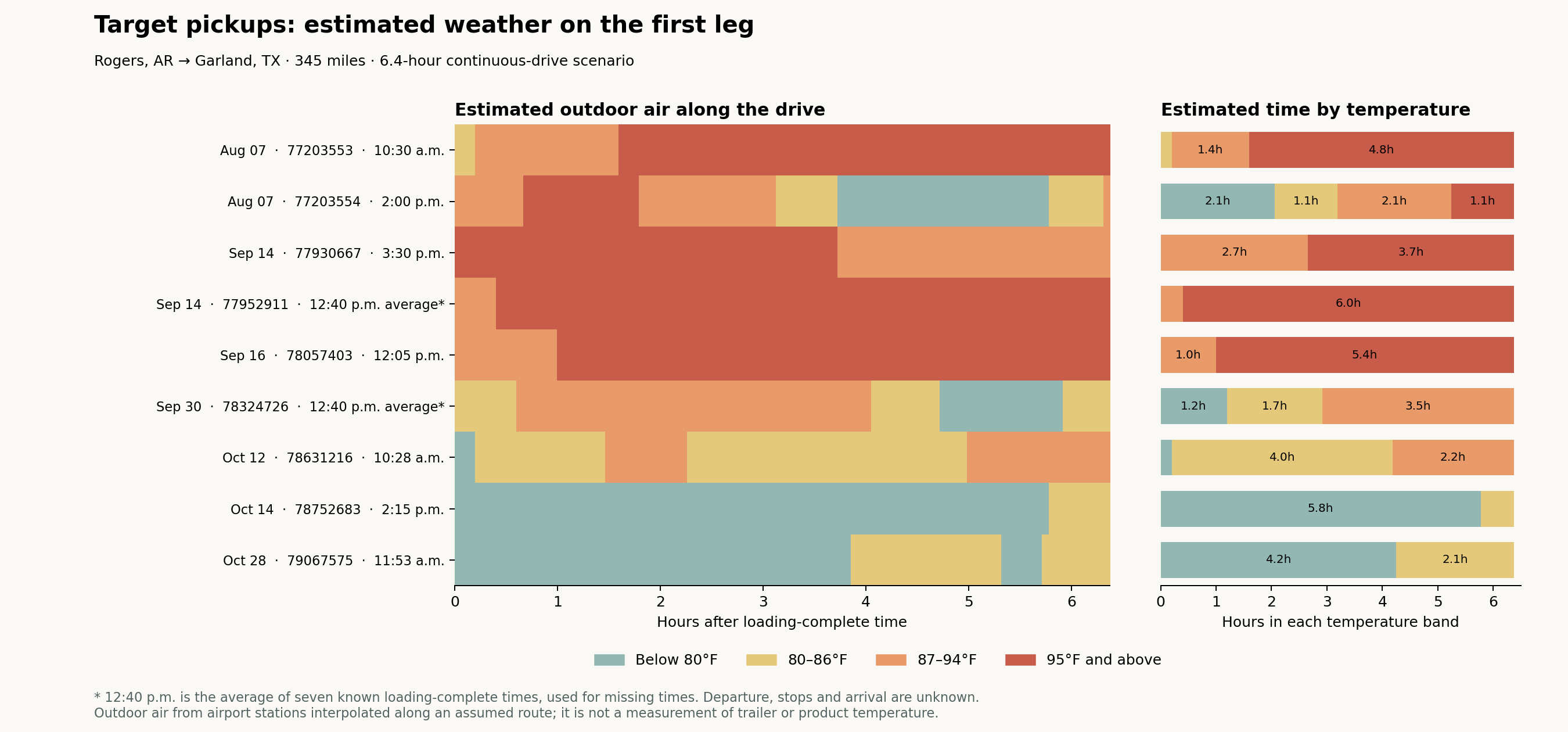
The nine master loads show pickups in Rogers, Arkansas, with Target’s consolidation point in Garland, Texas listed as the first ship-to point. The bills also identify downstream destinations. We do not have the actual truck routes, arrival times, onward transfers, or temperatures inside the trucks.
The chart estimates outdoor temperatures along an assumed direct Rogers-to-Garland drive starting at loading complete. For the two loads without a time, the model uses 12:40 p.m., the average of the seven known times. The driving duration and weather along the route are estimates, not measured product exposure.
Packout changes the exposure.
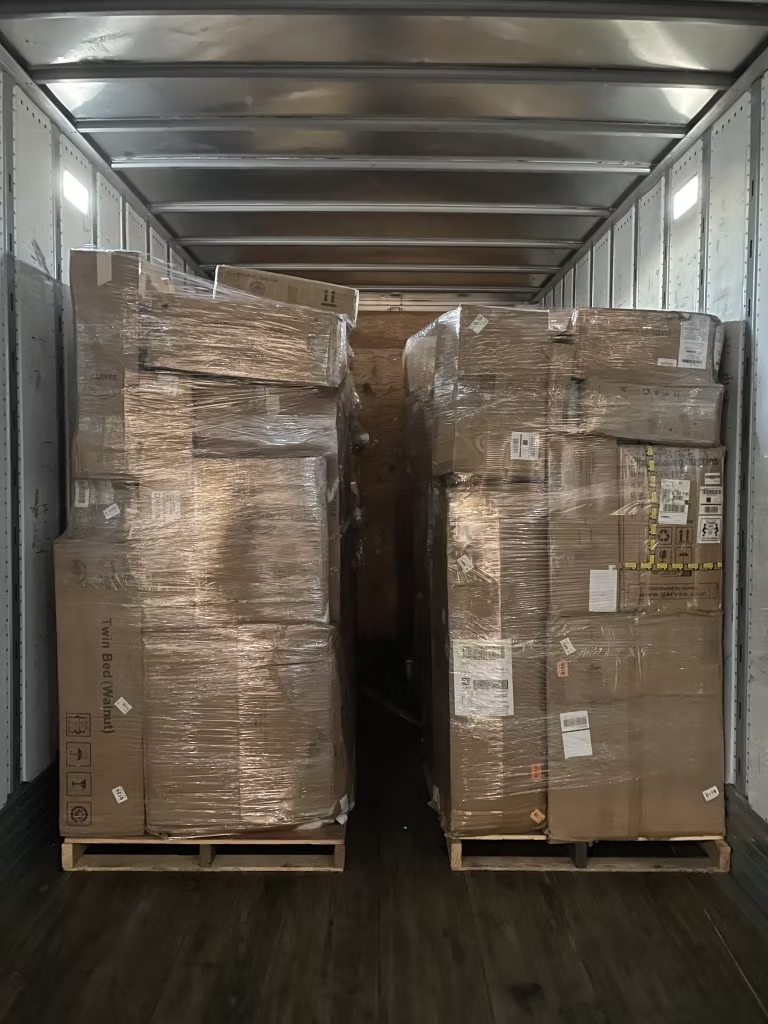
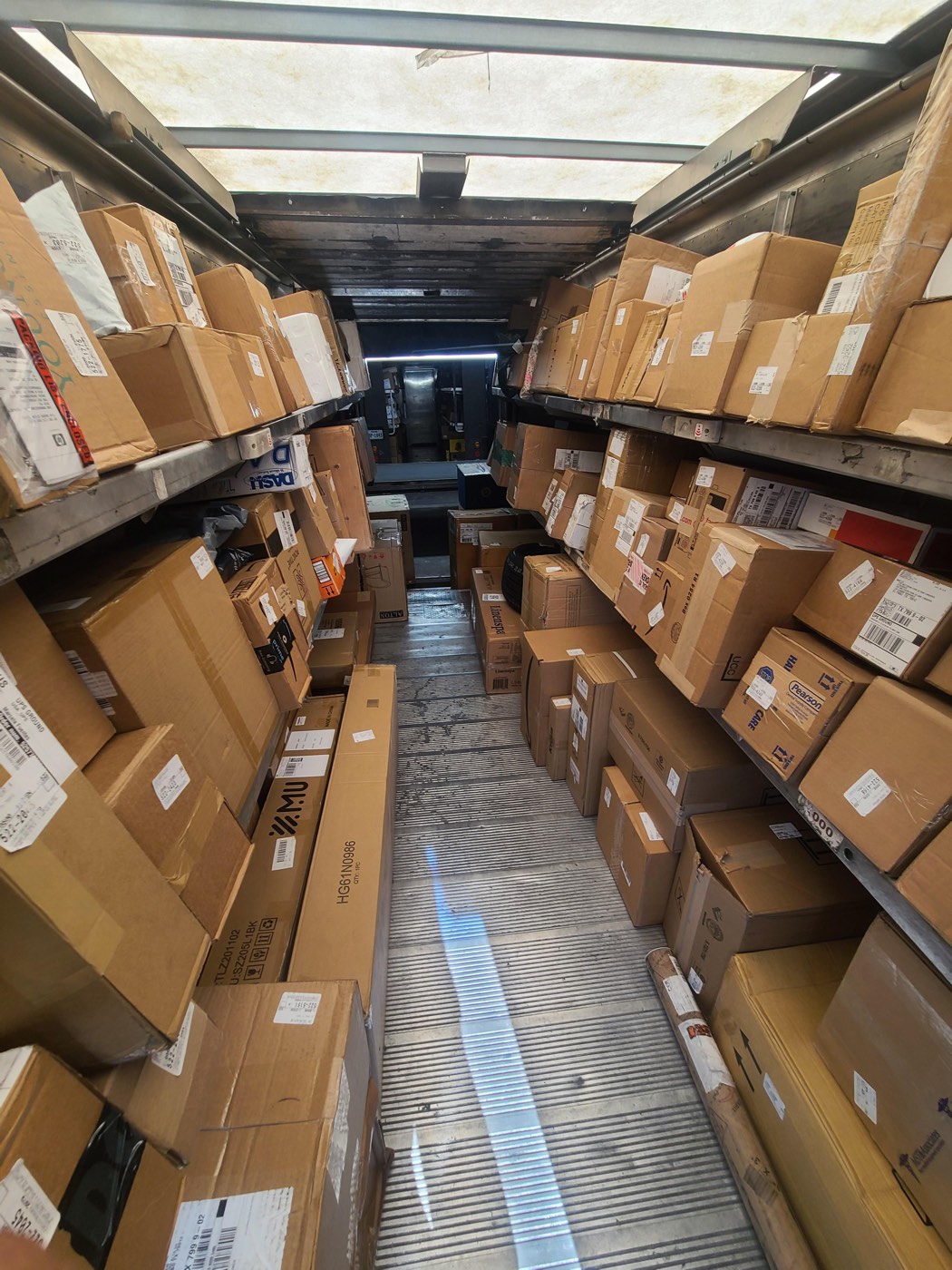
Cases packed together on pallets have thermal mass. The surrounding cases and packaging may slow how quickly product toward the middle warms. Individual parcels on a local delivery vehicle can experience a different environment, including positions close to vehicle walls. Loading, starting temperature, sunlight, and exposure time all matter.
One shipment, two different environments.
In a separate summer shipment to Florida, a logger sat outside insulated product boxes. During an approximately eight-hour UPS line-haul period, it stayed around 82–84°F while outside temperatures along the estimated route were about 90–95°F for much of the afternoon. On the local delivery leg, it reached 104.5°F while a nearby weather station was around 89°F.
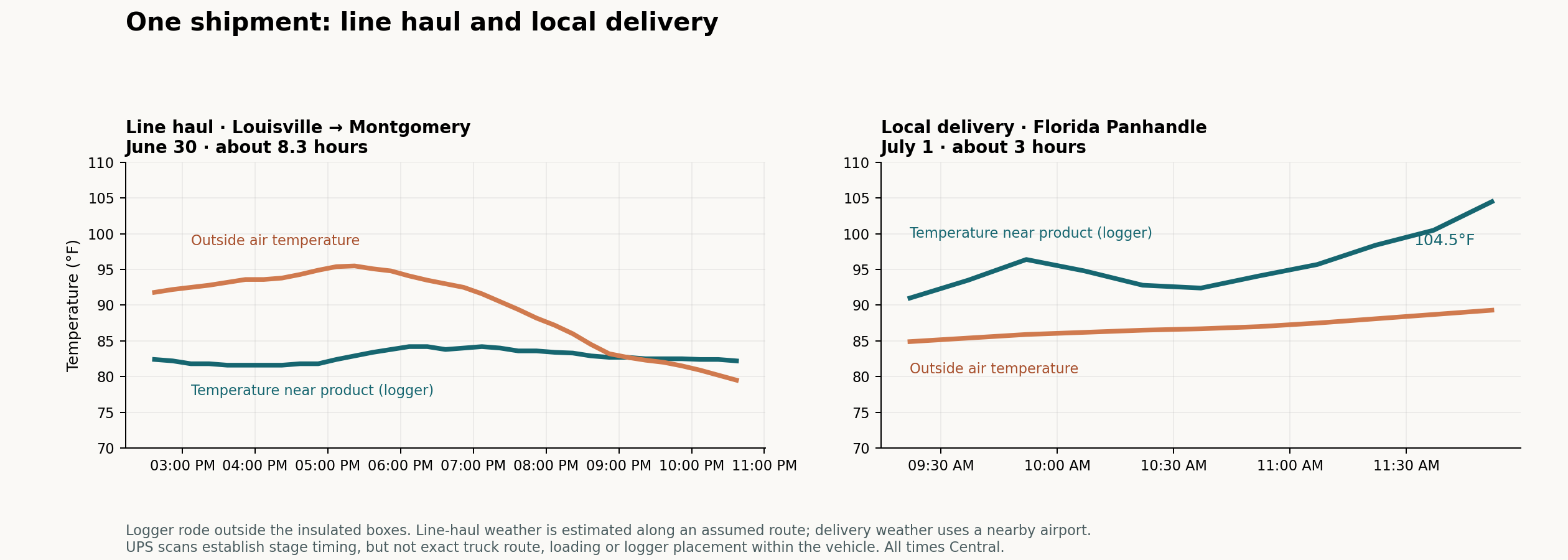
The example suggests that the temperature near a parcel can differ substantially from outside air, and that the line-haul and delivery stages can behave differently. It does not establish a fixed temperature difference for every truck or route.
Temperature and time both matter.
In an unprotected test in a small zip-lock bag, Rockers were not clumped after 11 hours in a 95°F chamber, when the test stopped. In a separate 115°F check, the product was goopy after 1.5 hours; the record does not specify the packout. We do not yet know the failure boundary between those conditions or the outcome after longer at 95°F.
Product heat tests: what we observed
Chamber temperature and elapsed time at each check
These are chamber conditions, not measured product temperatures. The different durations and uncertain 115°F packout limit direct comparison.
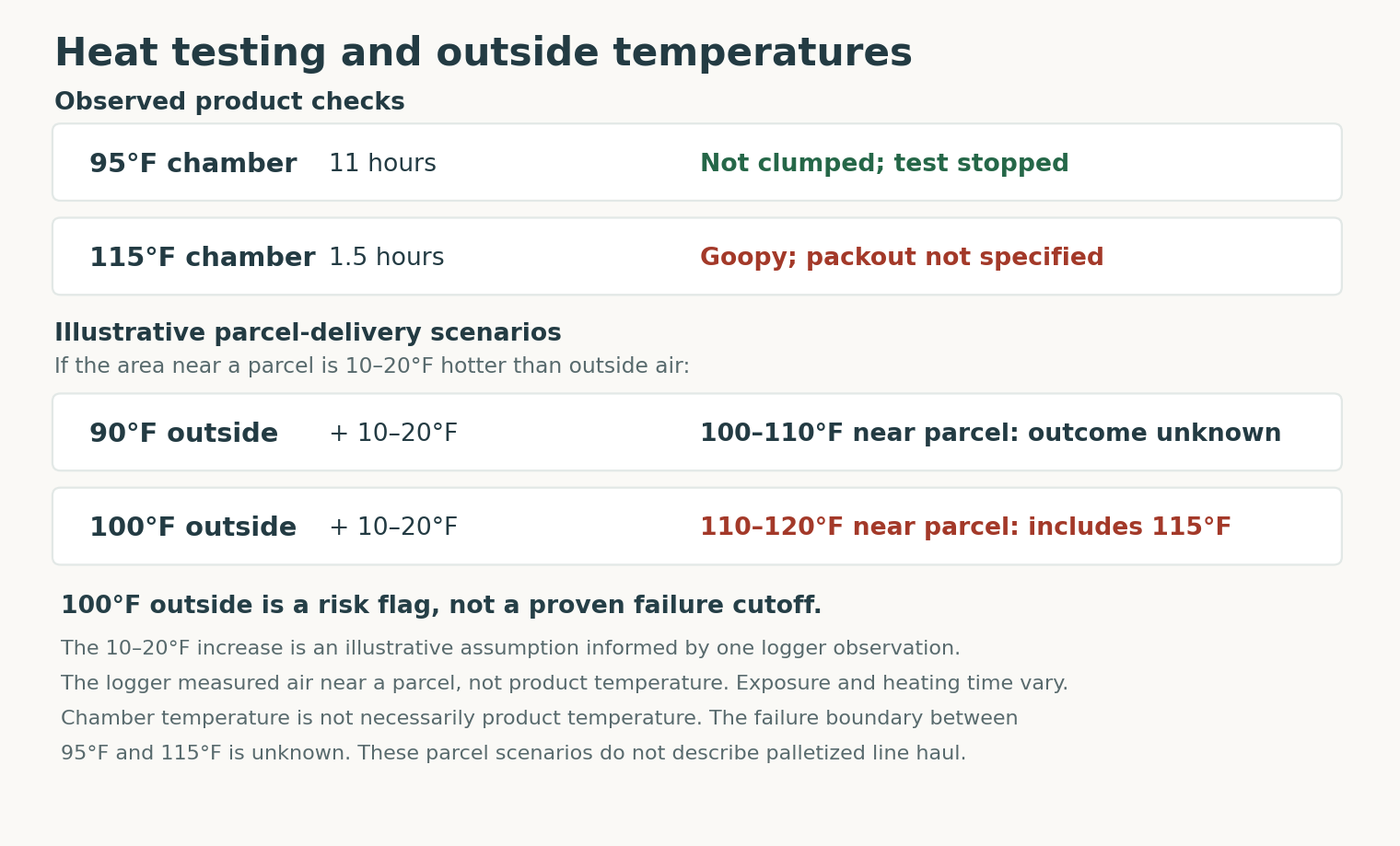
For example, if outside air is 100°F and the area near a parcel runs 10–20°F hotter, the resulting 110–120°F environment includes the 115°F chamber condition where goopiness was observed. That makes 100°F outside a parcel risk flag, not a proven failure cutoff. These parcel scenarios should not be applied directly to a palletized retail line haul.
Insulation and gel packs changed the test.
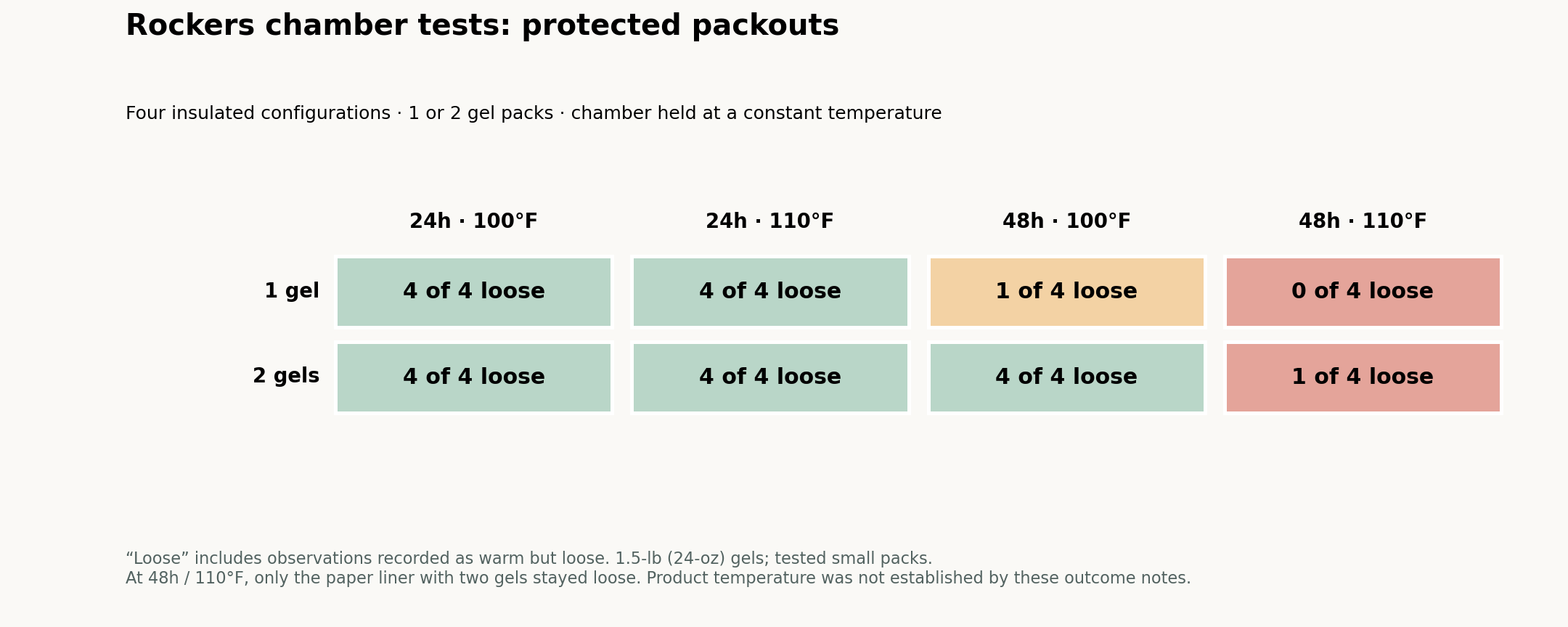
In an earlier 48-hour test, three protected configurations crossed the 86°F product threshold, but the gummies were not sticky or clumped when checked. The chamber report described a temperature of about 97°F. In later insulated-packout tests, all four configurations kept product loose for 24 hours at chamber temperatures of 100°F and 110°F. At 48 hours and 110°F, only the paper liner with two gels kept it loose.
Recommended tests and next steps
Place temperature loggers near the outside and center of a pallet on an actual Rogers-to-Garland load.
If the retail load is hard to instrument, ship logger-equipped UPS and FedEx parcels on a similar lane. They can help compare stages but cannot replicate a pallet.
Check unprotected Rockers at intermediate temperatures and durations for clumping, appearance and agreed quality criteria.
The timing of the retail shipping decision will determine which test to prioritize. We can also use the discussion to consider implications for DTC packaging.